
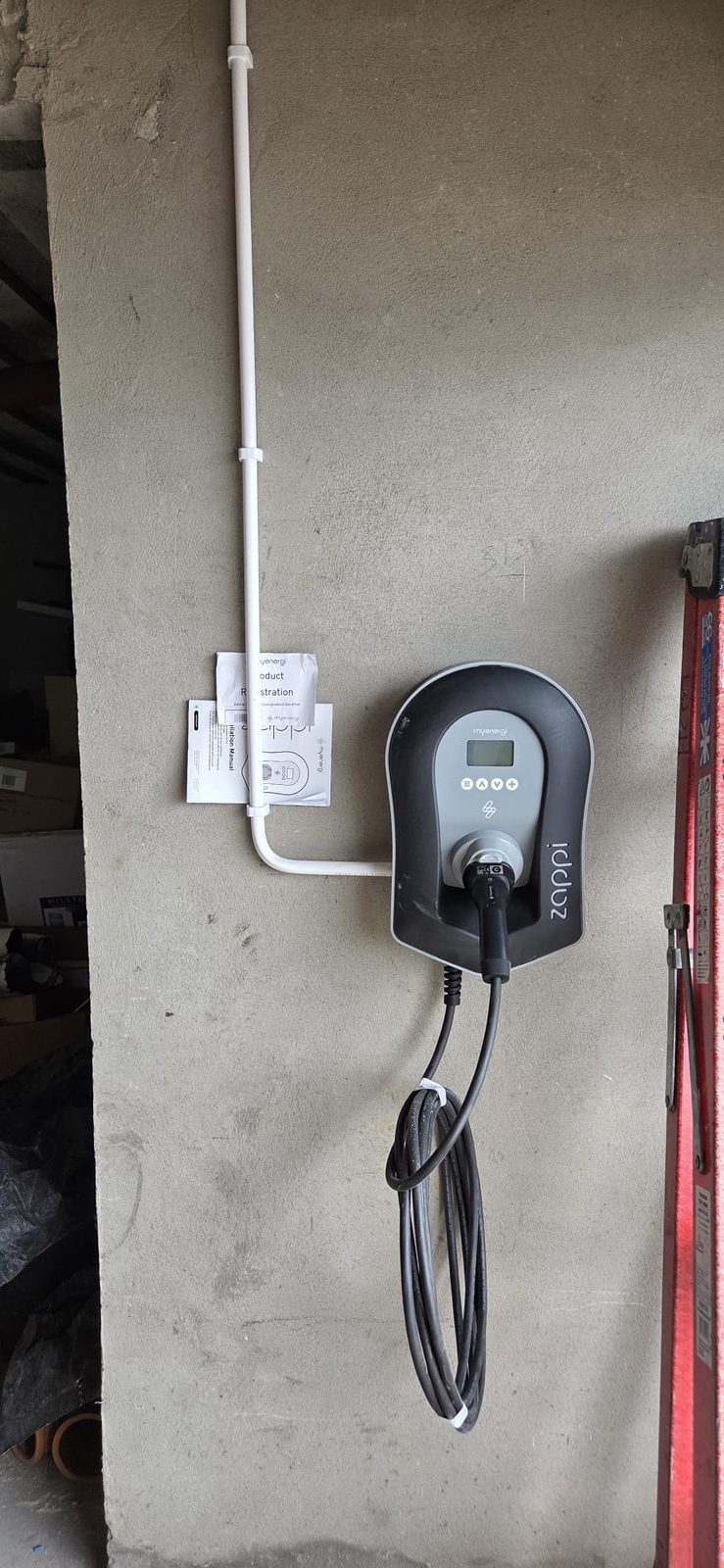
Most people research the charger and assume fitting it is a formality. It is usually the other way round: the unit itself is straightforward, and what decides the work is the supply already in the house.
The four things that matter
- Your main fuse rating. A charger draws a substantial, sustained load for hours at a time. Whether your incoming supply can take that alongside a shower, an oven and everything else is the first question.
- The consumer unit. A charger needs its own suitably protected way. If the board is full, or old enough that nothing is available for it, that becomes part of the job.
- The earthing arrangement. This is the one nobody expects. Charging outdoors introduces a specific risk that the installation has to be designed around, and the answer depends on how your property is earthed.
- The cable route. From the board to where you actually park. Through a wall, under a drive, along a soffit — this is often the largest part of the labour.
Why a survey first is worth it
All four can be established before anything is ordered. The alternative is an installer arriving on the day, discovering the board cannot take it, and either leaving or doing something compromised.
Load management
Where a supply cannot comfortably take a charger at full output, the answer is often not an upgrade but a device that throttles the charger when the rest of the house is drawing heavily. It charges a little slower at peak times and nothing else changes. That is usually far cheaper than reinforcing the supply.
What to ask
Ask what your main fuse is rated at, whether the board can take a dedicated way, and what the earthing arrangement means for an outdoor charge point. An installer who cannot answer those has not looked properly.